
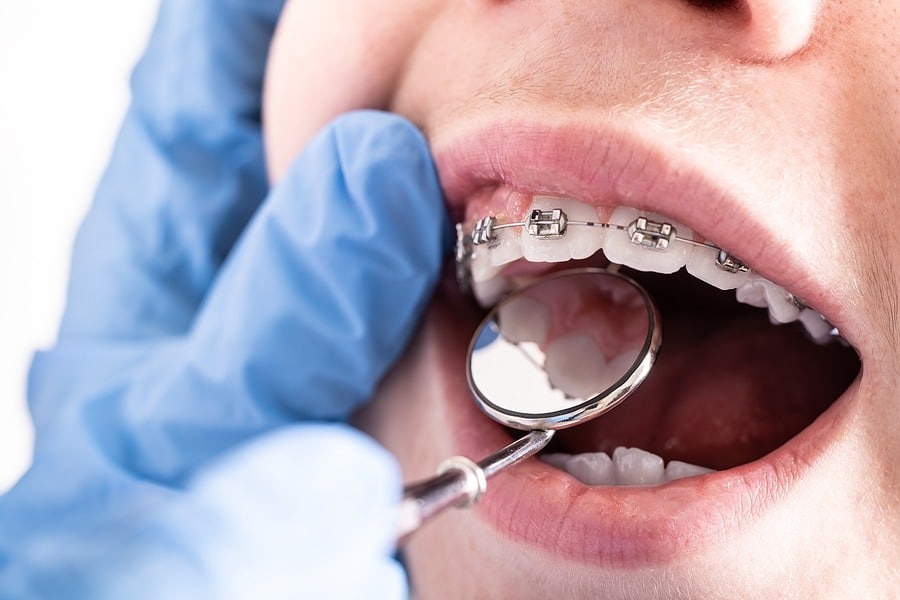
Medicaid can cover braces, but only when the treatment is judged medically necessary, and almost always only for patients under 21. Federal rules require every state Medicaid program to cover medically necessary orthodontic care for children, while cosmetic straightening is not covered. In California, that coverage runs through Denti-Cal, the dental side of Medi-Cal, and approval is decided case by case by the state. Here is who qualifies, how the decision actually gets made, and what to do if the answer comes back no.
Key Takeaways
- Medicaid covers braces only when they are medically necessary, not when the goal is purely cosmetic.
- Coverage for children under 21 comes through the EPSDT benefit, which every state Medicaid program must provide.
- In California, orthodontic benefits run through Denti-Cal under the Medi-Cal umbrella, and the state makes the final approval decision.
- Approval usually depends on a scored bite evaluation, so a mild alignment issue often will not qualify even when a family is fully eligible for Medi-Cal.
- WOW! Smiles is a Denti-Cal provider and offers free exams, so you can find out where you stand before you commit to anything. Call (844) 900-4969.
Does Medicaid cover braces for children?
For children, usually yes, when a dentist or orthodontist can show the bite problem is doing real harm.
Medicaid coverage for anyone under 21 is delivered through a benefit called EPSDT, which stands for Early and Periodic Screening, Diagnostic and Treatment. Under the federal EPSDT rules published by Medicaid.gov, covered dental services must include, at a minimum, relief of pain and infection, restoration of teeth, maintenance of dental health, and medically necessary orthodontic services. That last phrase is the whole ballgame. Orthodontics is in the benefit, but only the medically necessary kind.
States decide what “medically necessary” means in practice, and they do it with a scoring system rather than a judgment call. That is why two families with identical Medicaid cards can get two different answers.
Does Medicaid cover braces for adults?
Usually not. The EPSDT guarantee stops at a patient’s 21st birthday, and adult dental coverage under Medicaid is set state by state. Many states cover emergency dental work for adults and little else. Orthodontic treatment for an adult is rarely on the list.
If you are over 21 and hoping for coverage, plan around two realistic paths instead. Check whether you have separate dental insurance with an orthodontic rider, and ask the practice about monthly financing. At WOW! Smiles, treatment can be spread across interest-free monthly payments with no down payment, which our affordable payment options for braces page walks through in detail.
What counts as medically necessary orthodontic treatment?
This is the part families are rarely told up front, so it is worth being blunt about it.
Medicaid programs use a handicapping malocclusion index to score how severe a bite problem is. Malocclusion simply means the teeth do not meet correctly when the mouth closes. Cleveland Clinic’s overview of malocclusion notes that most cases are inherited and that untreated misalignment can contribute to tooth decay, gum disease, and problems with chewing or speech. The state is looking for that kind of functional damage, not for a smile that could look better in photos.
Some conditions qualify automatically. Based on the handicapping index used by the California Denti-Cal program and published on our own malocclusion severity index page, automatic qualifiers include:
- Cleft palate
- Craniofacial anomaly
- Deep, impinging overbite
- Anterior crossbite with tissue destruction
- Severe traumatic deviation
- Severe overbite with lip incompetence
Everything else gets scored. Severe crowding, a large overjet, an open bite and an underbite can all reach a qualifying score, but mild crowding or a small gap generally will not.
|
What the case looks like |
Likely Medicaid or Denti-Cal outcome |
What usually happens next |
|---|---|---|
|
Cleft palate or craniofacial anomaly |
Automatic qualifying condition |
Case submitted with strong support |
|
Severe overjet, open bite, or underbite with crowding |
Often scores high enough to submit |
State reviews and decides |
|
Moderate crowding, no functional damage |
Frequently scores below the threshold |
Financing or a payment plan |
|
Purely cosmetic concern about appearance |
Not covered under Medicaid rules |
Self-pay with monthly options |
|
Patient is 21 or older |
EPSDT no longer applies |
Dental insurance or financing |
How does braces coverage work under Medi-Cal and Denti-Cal in California?
If you are in Northern California, this is the version that matters to you.
Denti-Cal is not a separate program you apply to on its own. It sits under the Medi-Cal umbrella, so if you qualify for Medi-Cal, you are most likely eligible for at least some Denti-Cal benefits, as our WOW! Smiles and Denti-Cal guide explains. For children, the EPSDT process covers any Denti-Cal beneficiary who has not yet reached their 21st birthday, and Denti-Cal representatives can answer benefit questions at 800-423-0507.
Orthodontic approval then runs on its own track. New patients 21 and under can be screened. Patients who score high enough on the handicapping index and who are in full adult dentition (meaning the baby teeth are gone), have their case submitted to the state. The state, not the orthodontist, makes the final call. Accepted cases receive full coverage for treatment as long as benefits stay active through the whole course of care.
One honest caveat: in-office scoring by any orthodontist is not a guarantee. Only the state-level reviewers can accept or deny a case.
What are the steps to get braces covered by Medicaid?
- Confirm the patient’s Medicaid or Medi-Cal enrollment is active. Coverage that lapses partway through treatment can leave a balance, so check the status before anything else. Allow a few days if you need to call the county.
- Book a free orthodontic exam. At WOW! Smiles, the exam and consultation cost nothing, and you can request one online or by phone. Expect about an hour.
- Get the records and the score. The orthodontist takes photographs, digital scans, and X-rays, then scores the bite against the state index. This happens at or just after the first visit.
- Wait for the state decision on submitted cases. If the score clears the threshold, the case goes to the state for review. Turnaround varies, so ask your treatment coordinator what to expect.
- Choose a path if the answer is no. A denial is not the end of the road. Our treatment coordinators go over monthly payment options, and treatment can often start the same day you decide.
What if Medicaid will not cover braces?
Plenty of families land here, and it is worth saying plainly that a denial is a scoring decision, not a verdict on whether your child would benefit from treatment. Orthodontic care improves how teeth function and how people feel about their smile, and the state index does not measure the second part at all.
Three practical moves usually help. First, check any private dental plan for an orthodontic lifetime maximum, which our insurance and finances page explains along with the carriers we work with. Second, ask about interest-free monthly financing rather than assuming the full fee is due up front. Third, ask whether a different appliance changes the picture; a palate expander or early interceptive treatment can sometimes address a growing problem at lower cost than full braces.
The American Association of Orthodontists makes both points worth remembering here. Braces may be covered by Medicaid when they are considered medically necessary, and because every state program is different, verifying what your own state covers is the essential step. The AAO also notes that the fee itself moves with the type, complexity, and duration of treatment, which is exactly why no honest practice quotes a number over the phone. The ADA’s MouthHealthy guide to braces adds that correcting an abnormal bite is about oral health, not only appearance, since an uncorrected bite can lead to decay, gum disease, tooth loss, and abnormal enamel wear.
Frequently asked questions
Does Medicaid cover braces for adults?
Rarely. The federal EPSDT benefit that guarantees medically necessary orthodontic care ends at 21. Adult dental coverage varies by state and typically focuses on emergency and basic care, so adults usually rely on dental insurance or a payment plan instead.
Does Medi-Cal cover braces in California?
It can. Orthodontic benefits run through Denti-Cal under the Medi-Cal umbrella, and cases are approved individually. Patients 21 and under can be screened, and cases that score high enough on the state handicapping index are submitted for a coverage decision.
At what age does Medicaid stop covering braces?
The EPSDT benefit applies to enrollees who have not yet reached their 21st birthday. After that, orthodontic coverage depends entirely on your state’s adult dental benefit, and most states do not include braces.
Does Medicaid cover braces for crooked teeth?
Only when the crowding is severe enough to cause functional problems. Mild crookedness that does not damage the bite, the gums, or the teeth is treated as cosmetic under Medicaid rules and is not covered.
How do I find out if my child qualifies?
Start with a free orthodontic exam. The orthodontist scores the bite against the state index and tells you whether the case is strong enough to submit. That screening costs you nothing at WOW! Smiles.
Will Medicaid pay for Invisalign?
Coverage decisions cover medically necessary treatment rather than a specific brand, and each state program sets its own rules, so ask the office what yours allows before you plan around aligners. If you want aligners regardless of the answer, our Invisalign cost page explains what drives the fee.
What happens if my coverage ends partway through treatment?
Coverage has to stay active for the state to keep paying. If benefits lapse mid-treatment, the remaining balance becomes the family’s responsibility, so tell your treatment coordinator right away if your eligibility changes.
Does WOW! Smiles accept Denti-Cal?
Yes. WOW! Smiles is a Denti-Cal provider. Call (844) 900-4969 to ask which office is best placed to screen your child and what to bring to the visit.
Can I appeal a denied orthodontic case?
The state makes the final determination, and the appeal path is set by the state rather than the orthodontist. Your treatment coordinator can tell you what documentation the state accepted or rejected, which is a useful starting point.
Does a referral from a dentist help?
A referral is not required at WOW! Smiles, and it does not change the score. What matters is the clinical record: the photographs, scans, and X-rays that show what the bite is actually doing.
How long do braces take once treatment is approved?
Cleveland Clinic’s guide to dental braces puts the average course at about two years, with some cases finishing in under 12 months and complex ones running as long as three years. Your orthodontist gives you a specific estimate once the records are complete.
Find out where you stand, at no cost
You do not have to guess whether your child qualifies. A free exam gives you the score, the honest answer, and a plan either way. Our team handles the Denti-Cal paperwork, checks any private insurance, and lays out monthly options if the state says no. Request your free consultation or call WOW! Smiles at (844) 900-4969.