
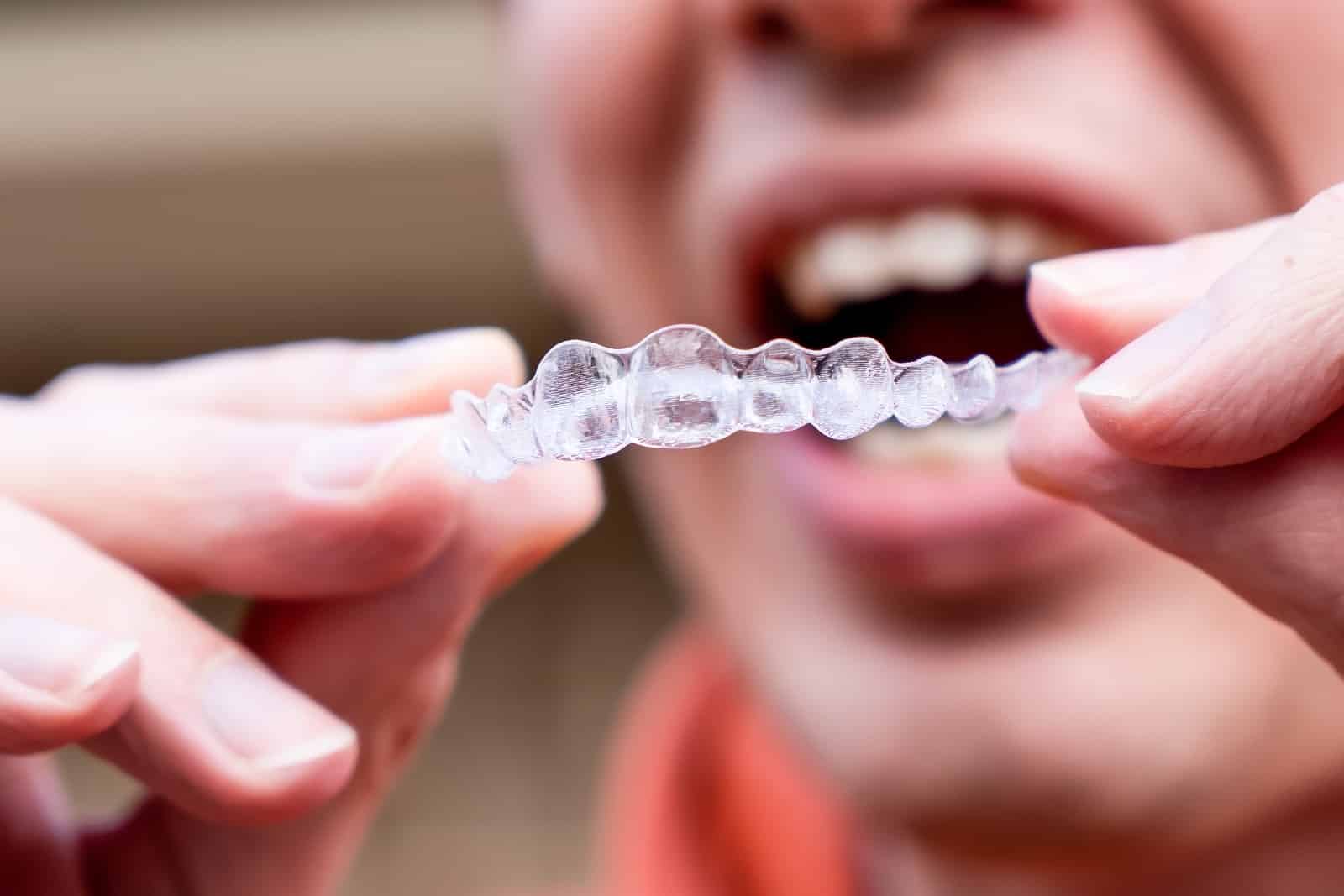
Many people type “can Invisalign fix crossbite” into a search bar before booking a consultation. Invisalign corrects many crossbites, and the honest answer depends almost entirely on two things: which kind of crossbite you have, and whether the cause is the position of the teeth or the width of the jaw. Dental crossbites respond well to aligners. A narrow upper jaw in an adult does not, because no aligner widens bone. Here is how that distinction is made and what it means for your options.
Key Takeaways
- Anterior and posterior crossbites are different problems with different treatments.
- A dental crossbite is a tooth position problem, and aligners handle it well.
- A skeletal crossbite is a jaw width problem. In a child, it is expanded; in an adult, it generally needs surgical assistance.
- Crossbites are among the strongest arguments for assessing a child early, because the window for expansion closes.
- A crossbite left untreated causes uneven wear and can shift how the jaw closes.
What a crossbite is
Normally, the upper teeth sit slightly outside the lower teeth all the way around, like a lid on a box. A crossbite is where that relationship is reversed somewhere.
An anterior crossbite is at the front: one or more upper front teeth sit behind the lower ones. When it affects all the front teeth, it is usually described as an underbite.
Posterior crossbite is at the back: upper back teeth bite inside the lower ones, on one side or both. This is the more common kind and the more commonly missed, because it is not visible when someone smiles.
There is a third pattern worth knowing. A functional crossbite is where the teeth would meet correctly, but a single interference makes the jaw slide sideways to close comfortably. It looks like an asymmetry and is really a shift. Catching one in a child matters, because a jaw that habitually closes off-centre can influence how the face grows.
Dental or skeletal, which decides everything
A dental crossbite means the jaws are the right size and correctly related, and individual teeth have erupted or tipped into the wrong position. Aligners handle these well, moving the teeth into a correct relationship, often using elastics attached to small bonded buttons.
A skeletal crossbite means the upper jaw is genuinely narrower than the lower, so the teeth are sitting correctly within a jaw that is the wrong width. No amount of tooth movement fixes a width problem, and pushing teeth outward to compensate risks moving roots beyond the bone that houses them, which causes gum recession.
The distinction is made from records and imaging, not from looking at a smile, which is why the assessment includes radiographs. It is also why the honest answer to “can Invisalign fix crossbite” always starts with the records.
|
Dental crossbite |
Skeletal, growing patient |
Skeletal, adult |
|
|---|---|---|---|
|
Cause |
Tooth position |
Narrow upper jaw, still developing |
Narrow upper jaw, growth complete |
|
Invisalign alone |
Usually yes |
No. Expansion first |
No |
|
Standard treatment |
Aligners or braces, often with elastics |
Palatal expander, then alignment |
Surgically assisted expansion, then alignment |
|
Timing |
Any age |
Time-critical. The suture fuses |
No urgency, but options are narrower |
|
Typical duration |
6 to 18 months |
Two phases over several years |
18 to 30 months plus surgery |
Why age matters so much here
The upper jaw is formed from two halves joined along a suture down the middle of the palate. In children and young adolescents, that suture has not fused, so a palatal expander can widen the jaw itself by separating the two halves slightly and letting new bone fill the gap. It is genuine skeletal change, and it works.
Once the suture fuses, which happens progressively through the mid-teens and varies between people, that route closes. An adult with a narrow upper jaw can have the teeth tipped outward to camouflage it, within the limits of the bone, or have the expansion done with surgical assistance. What cannot be done is widening the jaw with an aligner.
This is why a crossbite is one of the strongest reasons to have a child assessed by about age seven, as the American Association of Orthodontists recommends. Most children seen at that age need nothing. A child with a posterior crossbite is precisely the one who benefits from being found early.
Can Invisalign fix crossbite? Where it does well
- Anterior crossbites of one or two teeth, where an upper incisor sits behind a lower one.
- Mild to moderate dental crossbites in either arch.
- Crossbites alongside crowding, where creating space resolves part of the problem.
- Relapse cases, where a crossbite was corrected before and returned after retainers stopped.
- Adults with mild skeletal narrowness, treated as camouflage with clearly explained limits.
Treatment usually involves bonded attachments to give the trays grip and elastics between the arches to shift the relationship. Both are more visible than patients expect, and elastics need to be worn. Non-wear is the most common reason a crossbite plan runs over.
Where it does not
- Skeletal crossbites in adults, without surgical assistance.
- Significant posterior crossbites requiring real skeletal widening.
- Functional shifts with a large interference, which often need a fixed appliance first.
- Cases needing substantial root movement rather than crown tipping, where braces give more direct control.
An orthodontist who tells you aligners are not the right tool for your crossbite is giving you the most useful information in the appointment.
What happens if a crossbite is left
It is not purely cosmetic, which matters because posterior crossbites are easy to live with unnoticed.
The teeth in crossbite wear unevenly, because they are meeting at angles they were not shaped for. The jaw may habitually close off-centre, which loads one joint more than the other. Cleaning is harder where teeth are locked into an incorrect relationship, raising the risk of decay and gum disease. In a growing child, a persistent functional shift can influence facial development.
None of that means every crossbite is urgent. It means the assessment should cover function and wear rather than appearance alone. General dental health guidance covers the background.
WOW! Smiles
Dr. Rael Bernstein founded WOW! Smiles and completed his orthodontic specialty residency at the State University of New York at Buffalo, where he was later a clinical assistant professor in the orthodontic department, and has lectured nationally on self-ligation and early interceptive treatment. He is joined by Dr. Naveen, Dr. Wendan Li, Dr. Eric Wu, and Dr. Sierra Burick. Read more on our doctors page.
WOW! Smiles treats patients across Northern California, with offices in Monterey, Napa, Pittsburg, Salinas, Santa Rosa, Soledad, Ukiah, Vallejo and Watsonville. See our pages on Invisalign, braces and palate expanders.
Frequently asked questions
Can Invisalign fix a crossbite?
Many of them, yes. Dental crossbites, where the jaws are correctly sized and individual teeth are out of position, respond well to aligners. A skeletal crossbite caused by a narrow upper jaw does not, because no aligner widens bone. Records and imaging establish which you have.
What is the difference between an anterior and posterior crossbite?
An anterior crossbite is at the front, where upper front teeth sit behind the lower ones. A posterior crossbite is at the back, where upper back teeth bite inside the lower ones. Posterior crossbites are more common and more often missed because they are not visible when you smile.
How do I know if mine is skeletal?
You cannot tell by looking, which is why the assessment includes radiographs and a full set of records. Clues pointing toward skeletal include a crossbite affecting several back teeth on one or both sides, a narrow-looking upper arch, and a family history of the same pattern.
Why does age matter for crossbite treatment?
Because the upper jaw is formed from two halves joined by a suture that has not fused in children. A palatal expander can widen the jaw itself while that is true. Once the suture fuses through the mid-teens, genuine widening requires surgical assistance.
Will I need elastics with Invisalign?
For crossbite correction, very likely. Elastics run between the arches from bonded buttons or tray cut-outs and are what shift the bite relationship. They are visible, and they need to be worn most of the day. Non-wear is the most common reason a crossbite plan overruns.
How long does treatment take?
A mild dental crossbite often finishes within six to eighteen months. A skeletal case in a growing child is usually treated in two phases across several years. An adult case involving surgical assistance is planned over roughly two years, including the surgical and finishing phases.
Is a crossbite harmful if I leave it?
It causes uneven wear on the teeth meeting incorrectly, can make the jaw close off-centre and load one joint more than the other, and makes cleaning harder. In a growing child, a persistent functional shift can influence how the face develops. Mild cases may need no treatment.
Can a crossbite come back?
Corrected crossbites have a real tendency to relapse, more than several other corrections, which is why retention matters particularly here. In a growing patient, continued jaw growth can also reopen a crossbite corrected earlier, so growing patients are monitored until growth finishes.
Are braces better than Invisalign for a crossbite?
Not automatically, but braces give more direct control over root position and rotations, which some crossbite cases need, and they do not depend on wear time. Aligners handle many dental crossbites well. The recommendation should be specific to your case rather than a general preference.
Can one tooth in crossbite be fixed on its own?
Often, and it is among the more straightforward corrections, particularly a single upper incisor sitting behind a lower one. It is also worth treating rather than ignoring, because a single tooth in crossbite takes concentrated force every time you bite and can wear or become mobile over time.
Wondering whether your crossbite can be treated with aligners? WOW! Smiles will tell you whether it is dental or skeletal and what that means for your options. Call (844) 900-4969 or contact us.