

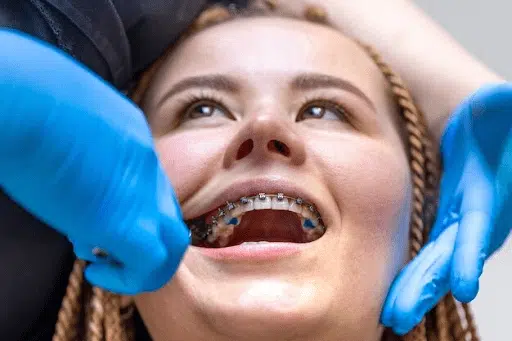
Traditional metal braces are the ones that pop into a person’s mind when they hear the word “braces.” Though the original smile straighteners, they aren’t the only option to straighten teeth and give people a beautiful smile.
Each kind has slight variations. Understanding the different types of braces and how they work can help you decide on the right one for you, one that’s easy to care for, fits your lifestyle, and is comfortable.
Main Types of Braces
As you begin your journey, you have an important task at hand, selecting the straightening method that’ll work the best for you and easily fit into your life. Each straightens in a similar manner but have qualities that help them stand out, with some decreasing treatment time or giving you a discreet way to correct your smile.
1.Metal Braces
Metal braces have passed the test of time, as they’ve been around since 1000 BCE. In the 18th century, they became more like what you know of today.
As a orthodontic provider serving northern California, with offices in Salinas, Santa Rosa, Pittsburg, and more, we use metal braces to effectively correct mild to complex issues, including gaps, spacing problems, crooked teeth, jaw misalignments, and other similar issues.
Though they still consist of dental-grade stainless steel, today’s versions are smaller than previous versions.
Components of Braces
With this option, our orthodontist carefully positions and bonds metal brackets to the front of the teeth using a dental adhesive. Our practitioner will then thread an archwire through the braces, one wire for the top set and one for the bottom to help move the teeth into their desired spots. The next step is the part many anticipate because they get to give their braces a pop of personality by choosing the color(s) of the elastic bands that hold the wires securely and assist in guiding the teeth.
How They Work
These braces work by gently applying pressure on the teeth to move them into more aesthetically appealing, easier to care for, functional positions. Over the course of your treatment, an orthodontist from our practice will make adjustments to your braces as necessary, ensuring your teeth continue to move where they should. With traditional and modern metal braces, the treatment moves each tooth individually, allowing an orthodontist to accurately control tooth movement.
How long they take to work depends on the severity of your orthodontic problem. In general, though, you’ll usually have braces for 18 months to three years, possibly less or more depending on your case.
2.Ceramic Braces
Ceramic braces are similar to metal braces; they can fix mild to severe cases and consist of brackets, wires, and elastics. They also work in the same manner by applying gentle pressure to the teeth to move them. These braces, however, consist of a dental-safe ceramic that’s durable, though a bit more fragile than metal. You can receive ceramic braces for the same types of issues as metal braces.
One key difference between ceramic and metal braces is appearance. With ceramic braces, the wires and brackets are either clear or tooth colored. They’ll blend better with your teeth and are less noticeable to others.
These are as effective as regular braces but may take slightly longer than metal braces to correct a tooth problem because of the added friction from the material.
3.Lingual Braces
Like with ceramic braces, lingual braces are more discreet than standard metal braces. But, they can be used on the same issues, including severe problems.
Lingual braces have the same components as traditional ones: wires, brackets, and bands. They even work in the same way — by moving the teeth into the proper positions. These are placed on the backside of your teeth, though, so that they aren’t as visible to others as standard metal braces.
Since the backs of the teeth are different than the fronts, each bracket is individually made to fit that side of the teeth. Once ready, our orthodontist will use an adhesive to attach the brackets. A wire is then placed through the brackets. Everything else is the same as with metal braces with these. You’ll still need to have routine visits.
4.Self-Ligating Braces
Self-ligating braces are a modern spin on standard metal braces. They consist of stainless steel but only have the brackets and archwire — no bands. In place of the ligatures, they have a clip built into each bracket that keeps the wire in place.
These are one of the types of braces that can fix mild to complex orthodontic concerns, usually in 18 to 36 months. That time can vary drastically based on the complexity of your case.
These work like metal braces; they apply gentle pressure consistently to move the teeth. Without the elastic bands, they cause less friction. The teeth can then move more effectively and comfortably.
Our orthodontist will monitor the process carefully throughout your treatment and will provide adjustments to continue your results. The more effective sliding means fewer visits for you. Though it depends on the specifics of the case, some patients receive full results sooner with self-ligating braces than traditional ones.
5.Invisalign
While Invisalign isn’t truly considered a type of braces, it’s popular way to straighten teeth, fix spacing issues, correct bite problems, and more. Without the use of metal, Invisalign gently shifts all of your teeth into their desired position by putting steady pressure on your teeth.
Invisalign clear aligners use translucent trays that fit over your teeth snugly but comfortably. You have one for the top and another for the bottom. As they put pressure on the teeth, they gradually move the teeth along a path pre-determined by our orthodontist.
To successfully shift your teeth, the aligners must remain on your teeth for at least 20 to 22 hours per day, only being removed when you brush, floss, eat, or drink anything besides water.
If you adhere to the guidelines, you can usually complete your treatment in 12 to 18 months. However, that timeframe depends not only on your compliance but the severity of your case. The most complex cases could take two years or longer, while the mild cases may only take six to nine months to address fully.
Of all the teeth straightening techniques, this one is the most discreet. However, it isn’t suitable for people with more serious orthodontic concerns, but it’s given many adults a second chance at a smile they’re proud of without having to be self-conscious about wearing metal braces for a year or so.
For teens who may be insecure about smiling and being in social situations when they have braces, Invisalign gives them the ability to smile confidently, whether they’re heading to the prom, graduation, or just a day out with friends.
How to Compare the Types of Braces
Each variety of braces has its share of benefits for a wearer, from cost-effectiveness to aesthetics. Nowadays, all types of braces are meant to be more inconspicuous than before, with Invisalign being the least noticeable.
In general, you won’t have to consider treatment duration. Each one of these takes a similar amount of time, but the only way to know which one will treat your problem most effectively and in the shortest amount of time is to schedule a consultation.
If the braces are for your child, you’ll want to consider their age and maturity level. Invisalign is great for preteens and teens who want a straight smile but don’t want metal braces. However, your child needs to be responsible enough to keep them in as long as recommended. If not, they may not receive the desired results, especially in the anticipated timeframe.
The final factor is finances. Invisalign and lingual are the most expensive, while traditional metal braces are the least expensive.
At WOW! Smiles, we offer different types of braces to help people of all ages achieve beautiful, healthy smiles. Some people are better candidates for metal braces, while others could use any option and receive the desired results. An orthodontist from our practice, such as Dr. Rael Bernstein, Dr. Naveen, Dr. Wendan Li, or Dr. Cheryl L. Held, can help you know for certain which option is best for you.
Schedule a Braces Consultation at WOW! Smiles
Schedule a braces consultation for you or your little one at on one of our offices. We’ll not just help you select the right braces but will support you or your child along they’re/your orthodontic journey.
FAQs
If you have specific questions about the types of braces or are just skimming through this blog, we’ve put together a list of the most frequently asked questions we hear from patients.
What are the four types of braces?
The four types of braces include metal, ceramic, self-ligating, and lingual braces. There’s also the option of clear aligners, which work similarly but give patients more freedom and are much less noticeable than braces.
What’s the most painful type of braces?
Braces tend to be uncomfortable as opposed to truly painful. That said, lingual braces usually cause the most irritation and place the most pressure on the teeth, making them the least comfortable option. Typically, after you have them placed, you’ll have a great deal of soreness for the first few days.
Is $5,000 expensive for braces?
That isn’t an unusually high amount for braces. The cost can be as low as $3,000 for certain options, but others can exceed $13,000, particularly lingual braces. Your orthodontist will provide you with a quote at your consultation so you know for certain how much it’ll cost you.
What’s the cheapest type of braces?
The cheapest type of braces is traditional metal braces. They consist of metal wires and brackets, along with elastic bands. While you can save money with this option, this is the most obvious orthodontic treatment.