

Content reviewed by Dr. Rael Bernstein, orthodontist and founder of WOW! Smiles in Northern California.
Every orthodontist is a dentist, but not every dentist is an orthodontist. A dentist looks after your overall oral health (cleanings, fillings, crowns, gum care) while an orthodontist is a dental specialist who completes two to three extra years of training to move teeth and correct bites with braces and aligners.
If you need a checkup or a cavity filled, see a dentist. If you want straighter teeth or a corrected bite, an orthodontist is the specialist who does that all day, every day. This guide breaks down the training, the services, and exactly which one to call.
Key takeaways
- A dentist handles general oral health; an orthodontist specializes in tooth movement, alignment, and bite correction.
- Both start with the same dental degree (DDS or DMD), but an orthodontist adds two to three years of accredited specialty training after that.
- See a dentist for cleanings, cavities, crowns, and routine care. See an orthodontist for crowding, gaps, overbites, underbites, and braces or Invisalign.
- Your dentist often refers you to an orthodontist, but you don’t need a referral to book an orthodontic consultation directly.
- Wondering which one you need? Request a free consultation with WOW! Smiles or call (844) 900-4969.

What does a dentist do?
A general dentist is your first line of defense for everyday oral health. They’re the provider you see roughly every six months for a checkup and cleaning, and the one you call when a tooth hurts.
Their work covers a broad range of the mouth: teeth, gums, and the soft tissue around them.
Typical services a dentist provides include:
- Routine exams, cleanings, and X-rays
- Filling cavities and treating tooth decay
- Crowns, bridges, and other restorations
- Root canals and tooth extractions
- Gum disease treatment and prevention
- Whitening and basic cosmetic work
As the ADA’s MouthHealthy resource explains, general dentists are trained to spot problems across the whole mouth and refer patients to a specialist when a case calls for focused expertise. That’s often where an orthodontist comes in.
What does an orthodontist do?
An orthodontist focuses on one thing: the position of your teeth and jaws. They diagnose, prevent, and treat misaligned teeth and bites, a field the American Association of Orthodontists defines as a recognized dental specialty.
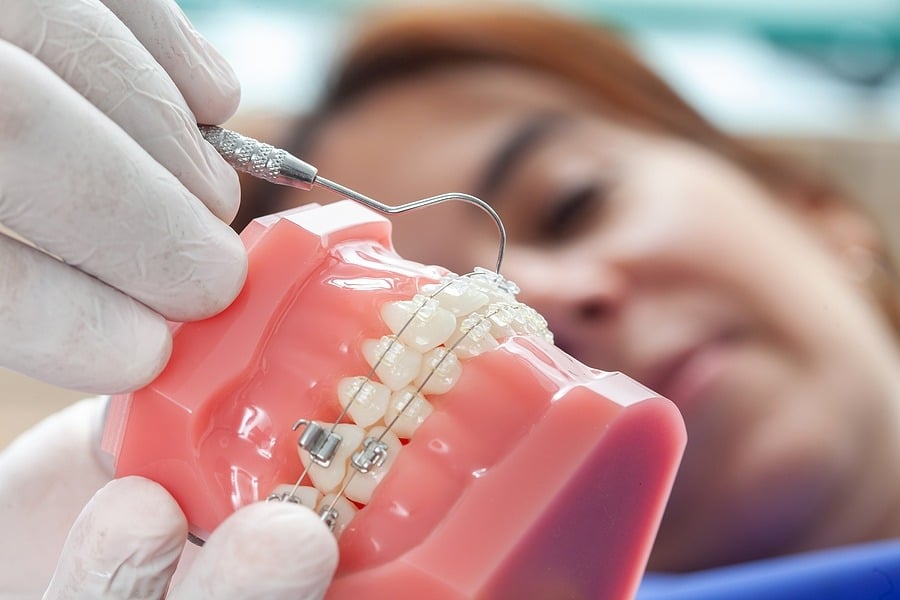
Because they concentrate on movement and alignment, orthodontists plan and manage the appliances that reposition teeth over months of treatment.
Common reasons people see an orthodontist:
- Crowded or overlapping teeth
- Gaps and spacing
- Overbite, underbite, or crossbite
- Open bite or a misaligned jaw
- Early guidance for a child’s developing bite
- Braces, clear braces, or Invisalign for teens and adults
At WOW! Smiles, that means everything from traditional braces with the Pitts 21™ bracket system to Invisalign clear aligners and early treatment for kids.
According to Cleveland Clinic, an orthodontist’s specialty training is what lets them predict how teeth will respond to steady pressure and design a plan around it.
Orthodontist vs dentist: the key differences
Both providers care about your teeth, but their training and day-to-day work diverge after dental school. Here’s how they compare side by side.
| Factor | General dentist | Orthodontist |
|---|---|---|
| Core focus | Overall oral health: teeth, gums, decay | Tooth and jaw alignment, bite correction |
| Education | Dental degree (DDS or DMD) | Dental degree plus 2 to 3 years accredited orthodontic residency |
| Specialty status | General practitioner | Recognized dental specialist |
| Everyday services | Cleanings, fillings, crowns, root canals | Braces, clear aligners, expanders, retainers |
| When you see them | Every 6 months and when something hurts | For straightening, spacing, and bite issues |
| Braces & Invisalign | Some offer limited aligner cases | Primary provider, full range of complex cases |
The biggest divider is that extra residency. Every orthodontist first earned the same degree a general dentist holds, then spent two to three more years training only on tooth movement and jaw development, per the American Association of Orthodontists.
That depth matters most when a case is complex. A severe bite problem, for example, benefits from a specialist who treats them constantly.
Can a dentist do braces or Invisalign?
Some general dentists offer clear aligners for straightforward cases, and that can be a reasonable option for minor cosmetic movement. The difference shows up with harder cases.
An orthodontist sees a full spectrum of bites every week, which sharpens their judgment on what’s achievable, how long it will take, and when a different approach is smarter.
MedlinePlus notes that orthodontic treatment is about more than appearance. A properly aligned bite is easier to clean and chew with, which protects long-term oral health.
If your case is simple, a dentist-provided aligner may work. If you have crowding, a bite issue, or you simply want the reassurance of a specialist planning every step, an orthodontist is the safer bet.
You can compare your options on our braces service page or ask us directly.
When should you see an orthodontist? (step by step)
Not sure whether it’s time to book a specialist? Walk through these steps.
- Start with your dentist. At a routine checkup, your dentist screens for alignment and bite problems and will flag anything worth a specialist’s look.
- Notice the signs yourself. Crowding, new gaps, teeth that shifted after old braces, jaw clicking, or trouble cleaning between crooked teeth are all reasons to consider an orthodontist.
- Book a consultation, no referral required. You can schedule an orthodontic exam directly. The American Association of Orthodontists recommends a first orthodontic check by around age 7 for kids, but adults can start anytime.
- Get a diagnosis and plan. The orthodontist examines your teeth and bite, often with digital scans, then explains your options, timeline, and cost.
- Decide together. You choose whether to move forward, and with which appliance: braces, clear braces, or Invisalign.
Why choose WOW! Smiles for your orthodontic care?
WOW! Smiles is a Northern California orthodontic group founded by Dr. Rael Bernstein, a South African trained orthodontist who built the practice into a nine-location team.
Alongside him, doctors like Dr. Eric Wu, Dr. Wendan Li, and Dr. Sierra Burick focus purely on orthodontics: braces, clear braces, Invisalign, palate expanders, and early treatment for children.
With offices in Monterey, Napa, Pittsburg, Salinas, Santa Rosa, Soledad, Ukiah, Vallejo, and Watsonville, there’s likely a WOW! Smiles near you.
The practice offers free consultations, 0% interest financing starting from $129/mo, and works with most insurance plans.
You can meet the full team on our doctors page or start as a new patient online.
Contact WOW! Smiles:
- Phone: (844) 900-4969
- Email: info@wowsmiles.com
- Book online: wowsmiles.com/contact-us
Frequently Asked Questions
Is an orthodontist a real dentist?
Yes. Every orthodontist finishes dental school and earns a DDS or DMD, then completes two to three additional years of accredited specialty training in tooth and jaw alignment.
What is the main difference between an orthodontist and a dentist?
A dentist manages overall oral health like cleanings, fillings, and crowns. An orthodontist specializes in moving teeth and correcting bites with braces and aligners.
Should I see a dentist or an orthodontist for crooked teeth?
For crooked teeth, spacing, or bite problems, an orthodontist is the specialist. Your dentist can refer you, but you can also book an orthodontic consultation directly.
Do I need a referral from my dentist to see an orthodontist?
No. You can schedule an orthodontic consultation on your own, though many patients are referred by their dentist after a checkup.
Can a regular dentist put on braces?
Some general dentists offer clear aligners for simple cases. For anything beyond minor movement, an orthodontist’s specialty training makes them the better choice.
Do I still need to see my dentist if I’m getting braces?
Yes. Keep up your regular dental cleanings and checkups during orthodontic treatment. Your dentist and orthodontist handle different parts of your care.
At what age should a child first see an orthodontist?
The American Association of Orthodontists recommends a first orthodontic evaluation by about age 7, even if treatment doesn’t start right away.
Is orthodontic treatment only for appearance?
No. Straighter teeth and a balanced bite are easier to clean and chew with, which supports long-term oral health, not just a nicer smile.
Does an orthodontist cost more than a dentist?
Orthodontic treatment is priced as a full course of care rather than a single visit. WOW! Smiles offers free consultations and 0% interest financing to make it manageable.
Can adults see an orthodontist, or is it just for kids?
Adults are welcome anytime. A large share of orthodontic patients today are adults choosing braces or Invisalign for the first time.
Ready to talk to an orthodontist?
If you’re weighing whether you need a dentist or an orthodontist for straighter teeth, the fastest way to know is a quick consultation.
Bring your questions about braces, Invisalign, timeline, and cost, and we’ll point you in the right direction.
Request your free consultation or call WOW! Smiles at (844) 900-4969.